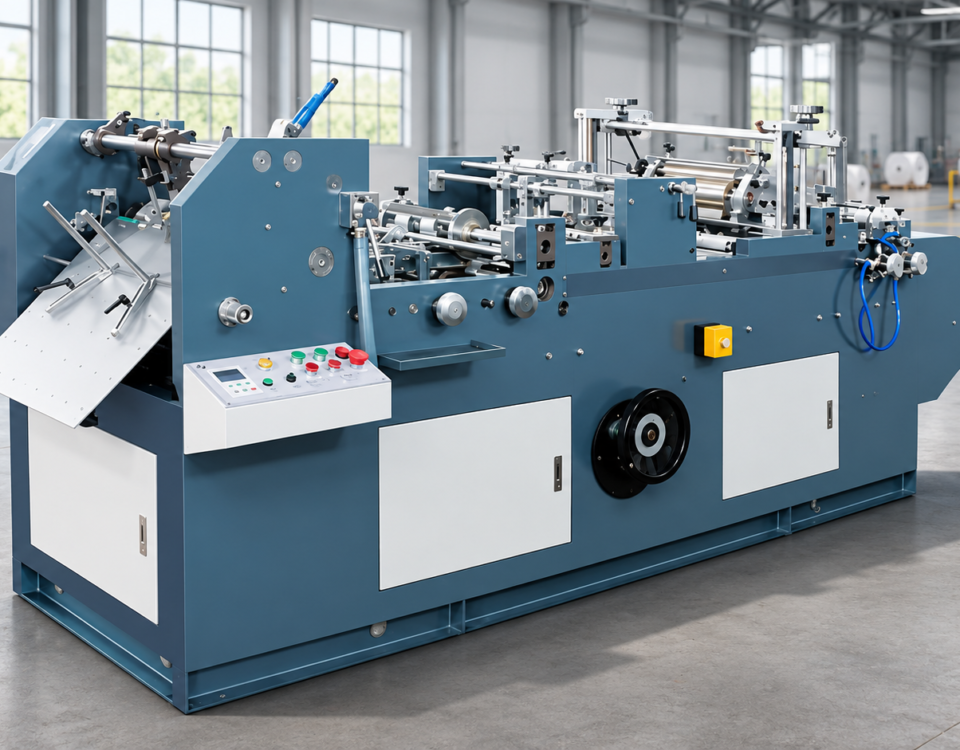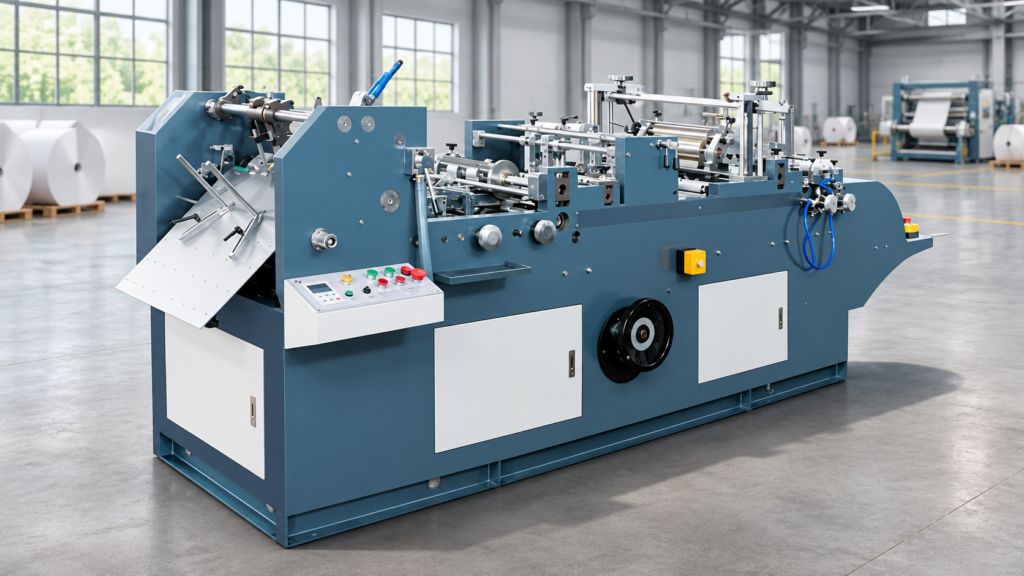
Envelope Making Machine Commissioning: Setup and Troubleshooting
October 27, 2026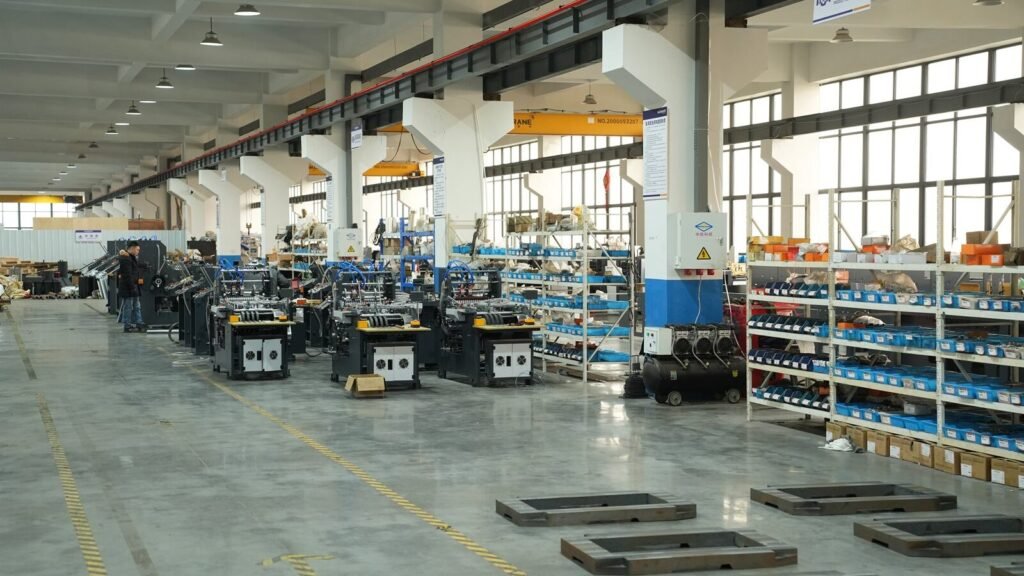
The short version
- Two automatic envelope machines can look identical on a spec sheet and still sit 40% apart in price.
- Price is set by six things: size range, glue system, speed tier, feeder type, tooling, and what the seller bundles after the sale.
- Published industry ranges for new automatic lines start around USD 25,000 and run past USD 100,000 — the number that matters is payback, not the invoice.
- Payback is arithmetic: sheets per hour × selling price per thousand × shift hours, minus paper, glue and labour.
- Ask for a quote built on your three most common jobs, not on the machine’s best-case demo run.
Most buyers start with a speed number and a budget. Both are the wrong end of the conversation. An envelope making machine is priced by the range of work it can take and by how much of the setup a customer has to do by hand — not by the peak figure printed on the brochure.
Why two machines with the same rated speed cost differently
Take two machines rated at 1,000 envelopes per minute. One is built to fold wallet envelopes up to 230 × 160 mm from 70–120 g/m² paper. The other runs 90 × 90 mm to 324 × 229 mm from 60–157 g/m², with a vacuum feeder, a wider glue path and a release-paper feed.
The second machine has more steel and more setup range. It costs more because it can take jobs the first one cannot — not because it is faster. When a supplier quotes you a headline price, the first question is always: at what size range and paper weight?
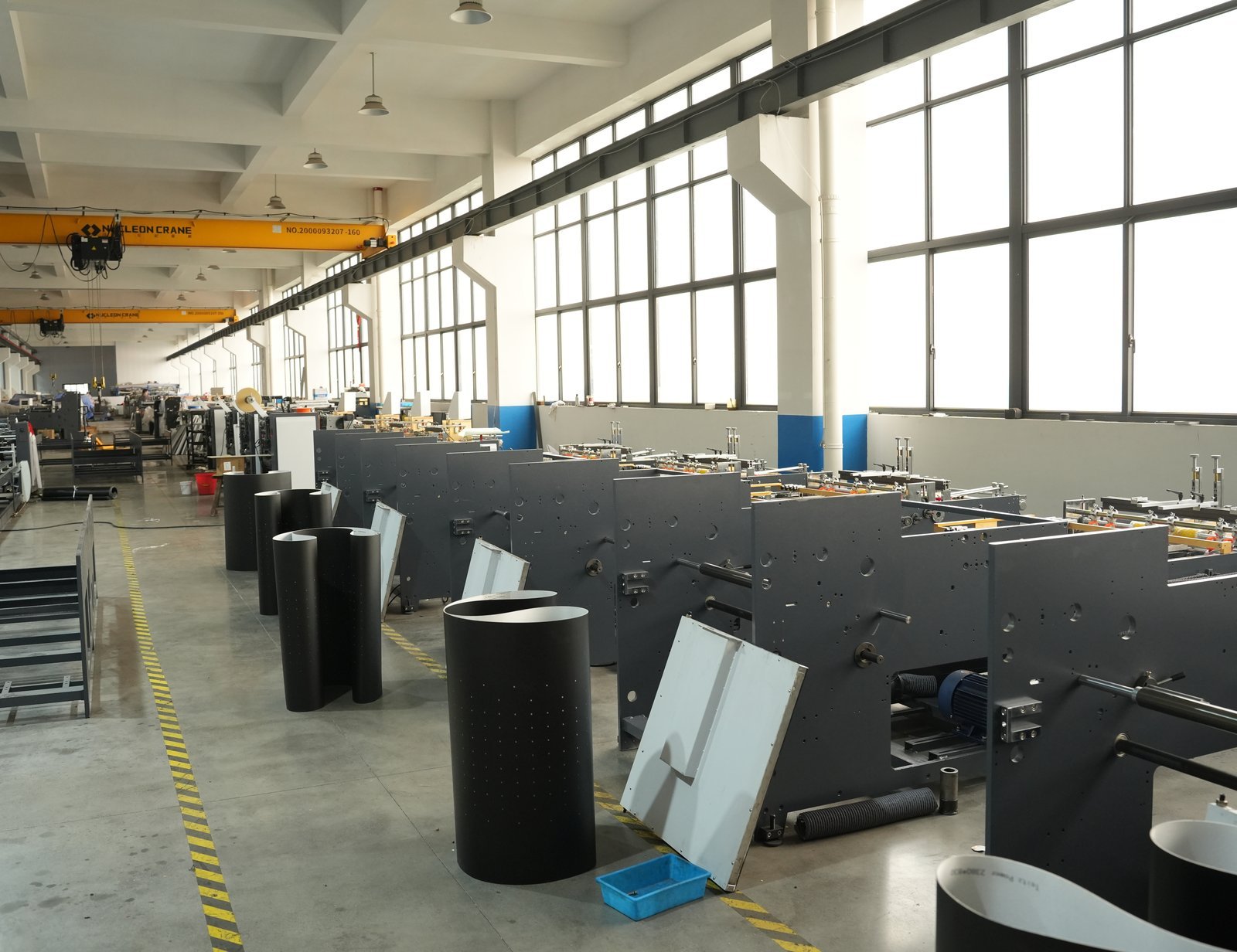
The six cost drivers
| Driver | What cheap looks like | What costs money | Why it matters |
|---|---|---|---|
| Size range | One or two envelope formats | Full range from small pocket to large wallet | Wider range needs longer frames, more adjustment points, heavier shafts |
| Glue system | Single cold-glue station, manual metering | Multiple glue heads, automatic cut-off, hot-melt option | Glue is where most waste is either avoided or created |
| Speed tier | 300–600 pieces/min | 800–1,200+ pieces/min | Higher speed needs more precise feeding and stronger vibration control |
| Feeder type | Friction feed | Vacuum / air-suction feed | Determines whether thin paper and coated stock run reliably |
| Tooling | Standard creasing and folding plates | Custom die sets, peel-and-seal module, window patching head | Tooling is often 8–15% of the total and is not always quoted |
| What comes after | Machine in a crate | Installation, training, spares kit, remote support, warranty terms | The cheapest quote frequently excludes all of it |
If you are comparing quotes right now: send us your three most common envelope sizes and paper weights and we will tell you which machine class actually covers them — before you compare prices.
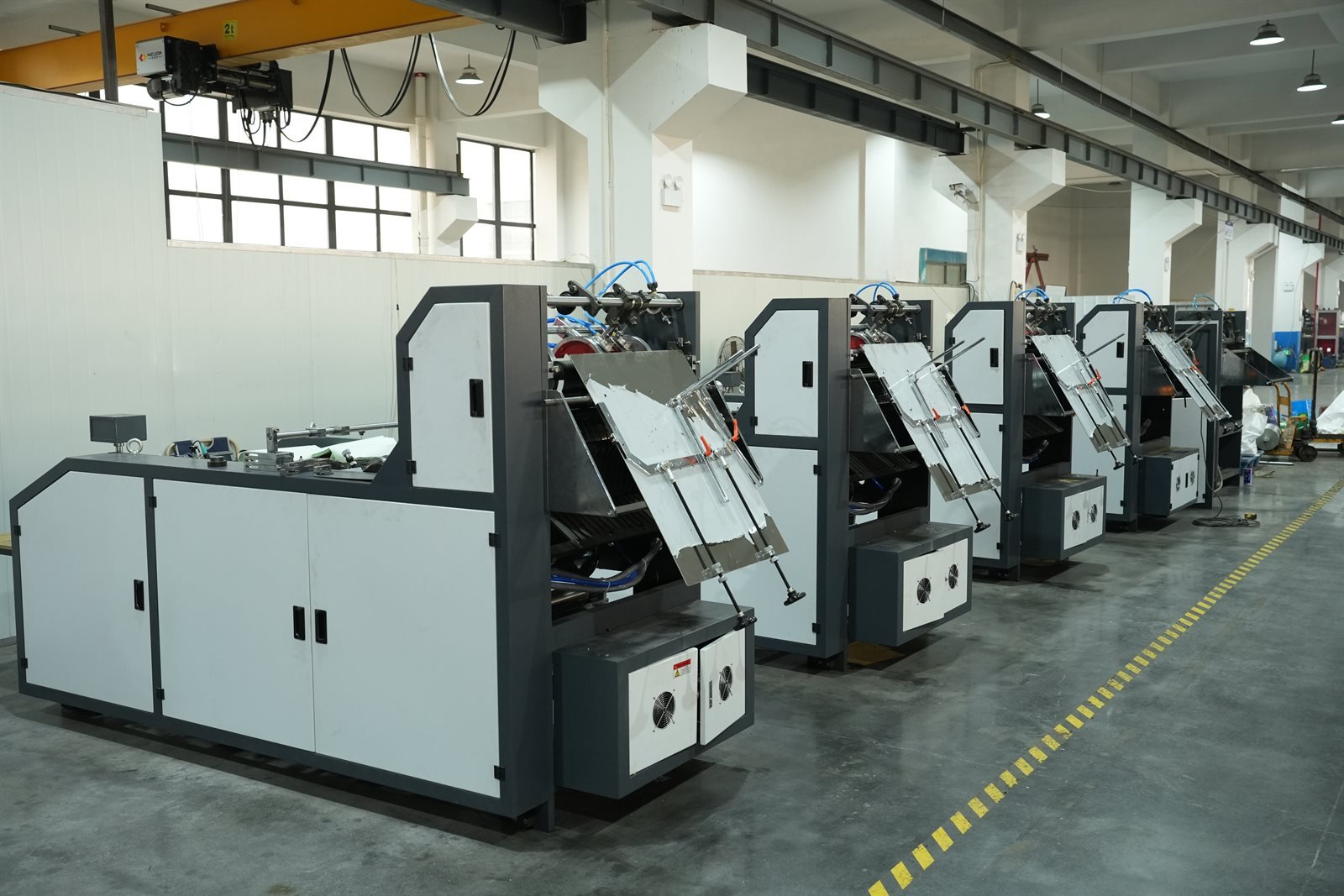
What published price ranges look like
Industry write-ups on automatic envelope makers typically place new machines from roughly USD 25,000 to USD 100,000 and above, with used units at 30–60% below that. Those figures describe the market as a whole, not a specific quotation: a 4-station window patching machine and a single-format pocket envelope machine do not belong in the same band.
Three practical consequences:
- Below the band usually means a semi-automatic machine, a much narrower size range, or a refurbished unit with limited spares support.
- The middle of the band buys a full-size-range machine with a vacuum feeder and a two-position glue system — the configuration most printing houses actually need.
- Above the band buys speed you may never use plus modules such as peel-and-seal, window patching or hot-melt that you may not need at all.
Payback maths, with a worked example
Payback is not a feeling; it is a division. Use your own numbers in this formula:
Payback (months) = Machine cost ÷ (Monthly output × Margin per 1,000 envelopes − Monthly running cost)
Worked example, with every assumption stated so you can replace them:
- Machine cost: USD 60,000 landed, including tooling and installation
- Realistic output: 600 pieces/min at 75% efficiency → 27,000 per hour
- Running: one 8-hour shift, 22 days → 4.75 million envelopes per month
- Margin per 1,000: USD 6 after paper, glue and labour
- Monthly contribution: USD 28,500
- Payback: 60,000 ÷ 28,500 ≈ 2.1 months
Change one assumption and the answer moves hard. Drop efficiency to 50% and payback doubles. Cut margin to USD 3 per thousand and you are looking at four months. This is why a supplier who quotes a machine without asking about your order mix is quoting you a number, not a business case.
Where the estimate usually breaks: rated speed is measured on a demo job with ideal paper. On a real shift, changeovers, paper jams and glue checks take 20–40% of the time. Use 60–75% of rated speed for planning, never 100%.
What to put in a quote request
A quote is only comparable if every supplier prices the same scope. Send this list:
- Your three highest-volume envelope or bag formats, with exact blank sizes in mm
- Paper weights and stocks, including the lightest and heaviest you actually run
- Whether you need peel-and-seal, window patching, or both
- Target output per shift, and how many shifts per day
- Available floor space and power supply (single or three phase, voltage)
- Who installs, who trains operators, and what the spare-parts lead time is
- Warranty length and what it covers — parts only, or parts and labour
Any quote that does not answer items 5–7 is not a price, it is an opening offer.
FAQ
Is a used envelope machine worth it?
Sometimes. Used units typically cost 30–60% less, but the risk moves to spares: check that creasing plates, glue nozzles and feed belts are still available before you buy. A used machine with no parts support is a one-job machine.
How long does delivery take?
Standard configurations usually ship in weeks, not months; custom tooling and window patching heads add lead time. Ask for the shipping date in writing, not the production date.
Do I need a window patching machine as well?
Only if your cartons have a die-cut window. If you run plain envelopes, a window patcher adds cost with no output benefit. If you run retail cartons, it is usually the difference between winning and losing the job.
What is the biggest hidden cost?
Changeover time. A machine that takes two hours to switch formats loses more money over a year than a machine that costs 20% more and switches in twenty minutes — especially if you run short orders.
Next step
Tell us your envelope sizes, paper weights and target output. We will tell you which machine class covers your mix, what it includes, and where the payback lands with your own numbers in it.